E-Commerce in 2026: WooCommerce vs Headless Solutions
WooCommerce is still the most popular e-commerce platform. But headless commerce is growing fast. When does each make sense, and when doesn't it?
WooCommerce powers roughly 25% of all online stores. Mature, well-documented, huge plugin ecosystem. But headless commerce (Shopify Hydrogen, Medusa, custom builds) is gaining ground fast. So which do you pick?
Choose WooCommerce When...
You need it fast and affordable. WooCommerce on a well-built custom theme can be live in 4-8 weeks. The plugin ecosystem handles most requirements out of the box: tax calculation, shipping rules, inventory management, coupon systems.
Your team uses WordPress. If your marketing team already manages content in WordPress, adding WooCommerce keeps everything in one familiar interface. No context switching, no new tools to learn.
Your catalog is moderate. For stores with 50-2,000 products, WooCommerce handles it comfortably. Our Kabinetplus project runs a full product catalog with categories, variants, and custom fields without performance issues.
Choose Headless When...
Performance is critical. Headless frontends built with Next.js can achieve sub-second page loads through static generation and edge caching. For high-traffic stores where every millisecond affects conversion, headless wins on speed.
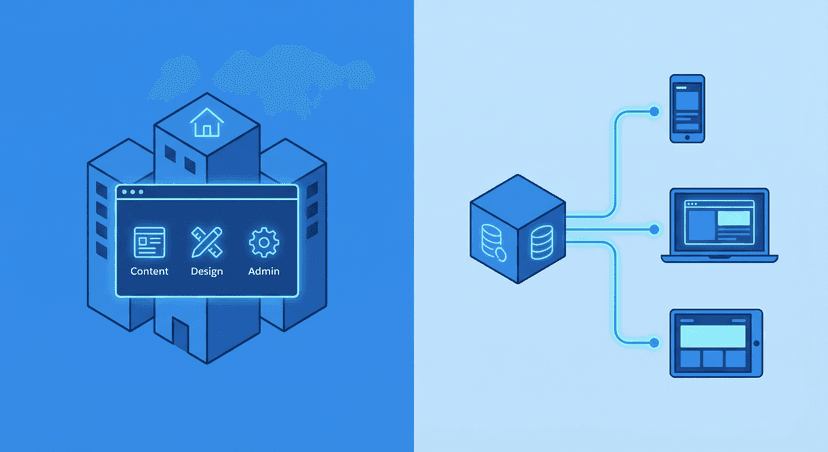
You need omnichannel. If you're selling through web, mobile app, in-store kiosks, and marketplaces, a headless architecture with a unified API layer makes sense. One product catalog, many frontends.
Your store is your product. If the e-commerce experience IS your competitive advantage (think custom configurators, AR try-on, dynamic pricing), headless gives you total control over every interaction.
The Wrong Reasons to Go Headless
Don't go headless because it's trendy. If your store is simple, traffic is moderate, and your team isn't technical, WooCommerce with a good theme will outperform a badly executed headless build every time. Best tech is the one that matches your actual needs.
Our Take
We've shipped successful stores both ways. For most small-to-medium businesses, WooCommerce with a custom theme is the best value. For businesses where the storefront IS the product, headless gives you the flexibility to build exactly what you want.